Ryobi 3000 PSI Pressure Washer Manual: A Comprehensive Guide
This manual provides detailed instructions for assembling, operating, and maintaining your Ryobi 3000 PSI pressure washer, ensuring optimal performance and longevity.
Congratulations on selecting the Ryobi 3000 PSI Pressure Washer! This powerful tool is designed for a wide range of cleaning tasks around your home and property, from washing vehicles and siding to preparing surfaces for painting or staining. Before first use, carefully review this manual to understand its features, operation, and safety guidelines.
This guide will walk you through the initial setup, including unboxing and component identification. It details connecting the high-pressure hose, spray wand, and soap tank, as well as establishing a reliable water source. Proper priming and startup procedures are explained to ensure efficient operation. Remember to always prioritize safety and follow the provided precautions to prevent injury and maintain the longevity of your pressure washer.
Safety Precautions and Warnings
WARNING: High-pressure spray can cause serious injury. Never point the wand at yourself or others. Always wear safety glasses or goggles to protect your eyes from debris. Avoid spraying electrical connections or outlets. Disconnect the power source before servicing or changing accessories.
Ensure a stable footing while operating the pressure washer. Keep children and pets away from the work area. Do not modify the pressure washer in any way. Use only Ryobi-approved accessories. Never operate the unit without all safety devices in place. Be mindful of the recoil force from the spray wand. Always release pressure before disconnecting hoses or nozzles. Read and understand all instructions before use.
Assembly and Setup
Proper assembly is crucial for safe and effective operation; this section details connecting components like the hose, wand, and soap tank for optimal use.
Unboxing and Component Checklist
Upon receiving your Ryobi 3000 PSI pressure washer, carefully inspect the box for any shipping damage. Once opened, verify all components are present. This includes the pressure washer unit itself, the high-pressure hose, a spray wand, a trigger handle, various nozzles for different spray patterns, the soap tank, and the soap application tube.
Refer to the parts diagram in this manual to confirm you have everything listed. Do not discard the packaging until you’ve confirmed all parts are accounted for. Missing components should be reported to the retailer immediately. Ensure all protective materials are removed before proceeding with assembly. A complete inventory ensures a smooth setup process and prevents frustration later on.
Connecting the High-Pressure Hose
To connect the high-pressure hose, first ensure the pressure washer unit is switched off. Locate the hose connection point on the pump – it’s typically a threaded fitting. Hand-tighten the hose connector onto this fitting, ensuring a secure connection. Avoid using tools for this step to prevent over-tightening and potential damage to the threads.
Completely uncoil and straighten the high-pressure hose before connecting it to the trigger handle. Kinks can restrict water flow and damage the hose. Securely attach the other end of the hose to the trigger handle, again hand-tightening the connection. Double-check both connections for tightness before proceeding.
Attaching the Spray Wand to the Trigger Handle
Begin by ensuring the pressure washer is completely powered down and disconnected from any power source. Locate the spray wand and the trigger handle assembly. Align the wand’s connector with the corresponding opening on the trigger handle. Gently push the wand into the handle until you hear a distinct click, indicating a secure lock.
Verify the wand is firmly attached by attempting to pull it free – it should not detach with moderate force. A loose connection can lead to water leakage and reduced cleaning performance. Ensure the locking mechanism is fully engaged. This step is crucial for safe and effective operation of your Ryobi 3000 PSI pressure washer.

Connecting the Soap Tank and Tube
Locate the soap tank and the designated connection point on the pressure washer unit. Carefully insert the soap tank into its holder, ensuring it sits securely. Next, connect the soap tube to both the soap tank outlet and the inlet port on the pressure washer.
Confirm a snug fit at both ends to prevent leaks during operation. Pour pressure washer detergent into the soap tank, following the manufacturer’s recommendations for dilution ratios. This setup allows the unit to draw detergent for effective cleaning. Remember to check the tube for kinks or obstructions before each use, ensuring optimal detergent flow.
Water Source Connection
Before starting, ensure a reliable water supply is readily available. Connect the high-pressure hose to a standard garden hose, and then attach the garden hose to an outdoor faucet. Fully open the faucet to provide maximum water flow to the pressure washer.
Inspect the connections for leaks and tighten as needed. Avoid using water sources with sediment or debris, as this can damage the pump. A water filter is recommended for well water or potentially dirty sources. Always ensure the water supply remains consistent during operation to maintain optimal pressure and prevent pump damage.

Starting the Unit
Proper startup involves a cold start procedure, fuel valve operation, priming the pump, and allowing pressure to build for effective cleaning.
Cold Start Procedure
Before initiating the cold start, ensure the unit is properly assembled with all connections secure – high-pressure hose, spray wand, and soap tank if desired. Begin by pouring pressure washer detergent into the soap tank, preparing for potential detergent use during operation. Next, connect the spray wand firmly to the trigger handle, and then attach the high-pressure hose to the pump.
Crucially, completely uncoil and straighten the high-pressure hose to prevent frustrating kinks that can impede water flow and pressure. Confirm the fuel valve is in the ‘ON’ position. Squeeze the trigger and patiently wait approximately five seconds for detergent to begin flowing, if applicable. This priming action is vital for a successful cold start and consistent performance.
Fuel Valve Operation (ON/OFF)
The fuel valve controls the gasoline supply to the engine, directly impacting the pressure washer’s operation. Understanding its function is crucial for safe and efficient use. The valve features two distinct positions: ‘ON’ and ‘OFF’, clearly marked for easy identification. When initiating the pressure washer, always ensure the fuel valve is firmly positioned to ‘ON’ to allow fuel flow and enable engine ignition.
Conversely, when the pressure washer is not in use, or during extended storage, rotate the fuel valve to the ‘OFF’ position. This immediately halts fuel delivery, minimizing the risk of fuel leaks and potential fire hazards. Regularly inspect the valve for any signs of damage or leakage, and address any issues promptly to maintain operational safety.
Priming the Pump
Priming the pump is a vital step in preparing your Ryobi 3000 PSI pressure washer for initial startup, especially after periods of inactivity or when the pump has run dry. This process removes air from the pump, ensuring efficient water intake and pressure build-up. Locate the priming port, typically found near the water inlet connection.
Loosen the priming port screw and carefully pour water into the port until a steady stream emerges, indicating the pump is fully primed. Retighten the screw securely. This action prepares the pump to draw water effectively when the engine is started, preventing damage and ensuring optimal performance. Failure to prime can result in reduced pressure or engine stalling.
Initial Startup and Pressure Build-Up
After priming the pump and ensuring all connections are secure, initiate the engine startup following the cold start procedure. Once the engine is running, allow it to stabilize for a few moments before squeezing the trigger on the spray gun. Initially, you may experience a slight fluctuation in pressure as the pump expels any remaining air.
Continue squeezing the trigger intermittently, allowing the pressure to gradually build up to its optimal level. This process typically takes 10-20 seconds. Observe the pressure gauge to monitor the build-up. Avoid prolonged trigger engagement during this phase to prevent unnecessary strain on the pump. A consistent, high-pressure stream indicates successful startup and pressure build-up.
Operating Instructions
Effectively utilize your Ryobi 3000 PSI pressure washer by selecting the correct nozzle, adjusting spray patterns, and applying detergent with the trigger technique.
Selecting the Appropriate Nozzle
Choosing the right nozzle is crucial for effective cleaning and preventing damage to surfaces. Your Ryobi 3000 PSI pressure washer likely includes a set of interchangeable nozzles, each designed for a specific cleaning task. A 0-degree nozzle delivers a concentrated, powerful stream ideal for stubborn, stuck-on dirt, but use caution as it can etch softer materials.
A 15-degree nozzle offers a more moderate spray, suitable for decks and siding. The 25-degree nozzle is excellent for general cleaning tasks like cars and patio furniture. A 40-degree nozzle provides a wider, lower-pressure spray for delicate surfaces. Finally, a soap nozzle creates a foamy spray for applying detergent effectively. Always test the nozzle on an inconspicuous area first to ensure it doesn’t cause damage.
Adjusting Spray Patterns
Many Ryobi 3000 PSI pressure washers feature adjustable spray patterns directly on the spray wand. This allows you to quickly switch between different cleaning modes without changing nozzles. Typically, a rotating collar or dial controls the spray width, ranging from a narrow, focused jet to a wider fan spray.
Experiment with these settings to find the optimal pattern for your specific cleaning task. A narrow jet is effective for concentrated cleaning, while a wider fan spray covers larger areas more quickly. Remember to consider the surface material; delicate surfaces require a wider, lower-pressure spray to avoid damage. Regularly check the adjustment mechanism to ensure smooth and precise control over spray patterns.
Using Detergent with the Soap Tank
To utilize the soap tank on your Ryobi 3000 PSI pressure washer, first ensure it’s securely attached and filled with pressure washer-specific detergent – household cleaners can cause damage. The detergent draw system automatically mixes the soap with water when the trigger is squeezed.
Initially, you may need to prime the system by squeezing the trigger for a few seconds after filling the tank. Adjust the detergent concentration using the built-in control knob, if equipped, to achieve the desired cleaning strength. Always rinse thoroughly after applying detergent to prevent residue buildup. Refer to the detergent manufacturer’s instructions for proper dilution ratios and safety precautions.
Applying Detergent – Trigger Squeeze Technique
When applying detergent with your Ryobi 3000 PSI pressure washer, a specific trigger squeeze technique ensures optimal cleaning. After filling the soap tank and connecting the tube, squeeze the trigger and hold it for approximately five seconds to allow the detergent to mix with the water stream.
Observe the nozzle for a foamy, consistent spray, indicating proper detergent flow. Continue squeezing the trigger while applying the detergent solution to the surface, working from bottom to top for even coverage. Release the trigger to stop detergent flow and rinse thoroughly with a clean water spray. Repeat as needed for stubborn stains, always following detergent manufacturer’s guidelines.
Optimal Operating Pressure
Determining the optimal operating pressure for your Ryobi 3000 PSI pressure washer is crucial for effective cleaning without causing damage. Start with a lower pressure setting, especially when cleaning delicate surfaces like painted wood or vehicles. Gradually increase the pressure, testing on an inconspicuous area first, to find the sweet spot for removing dirt and grime.
For tougher jobs like concrete or heavily soiled surfaces, a higher pressure may be necessary. However, avoid exceeding the maximum PSI rating of the washer. Always select the appropriate nozzle for the task, as different nozzles deliver varying pressure levels. Regularly check the pressure gauge to maintain consistent cleaning power.

Maintenance and Care
Regular maintenance ensures your Ryobi 3000 PSI pressure washer operates efficiently and reliably, extending its lifespan through proper cleaning and storage practices.
Cleaning the Nozzles
Maintaining clean nozzles is crucial for optimal pressure washer performance. Over time, mineral deposits and debris can clog the nozzle orifices, reducing spray force and efficiency. To clean, first, disconnect the spray wand from the trigger handle. Then, carefully remove the nozzle.
Inspect the nozzle opening for any visible obstructions. Use a thin wire, such as a paperclip or nozzle cleaning tool (available at most hardware stores), to gently dislodge any debris. Avoid using anything that could enlarge or damage the nozzle opening.
After clearing the obstruction, rinse the nozzle thoroughly with water to remove any remaining particles. Reattach the nozzle to the spray wand, ensuring it clicks securely into place. Regularly cleaning your nozzles will help maintain consistent pressure and extend the life of your Ryobi 3000 PSI pressure washer.
High-Pressure Hose Inspection and Storage
Regularly inspect the high-pressure hose for any signs of damage, including cuts, abrasions, bulges, or kinks. A damaged hose can burst under pressure, posing a safety hazard. Before each use, carefully examine the entire length of the hose. If any damage is detected, replace the hose immediately – do not attempt repairs.
Proper storage is essential to prolong the life of your high-pressure hose. After each use, completely uncoil and straighten the hose to prevent kinks from forming. Store the hose in a cool, dry place, away from direct sunlight and extreme temperatures.
Avoid bending the hose sharply during storage. Coiling the hose loosely is preferable to tight wrapping. This prevents stress on the hose material and helps maintain its flexibility. A dedicated hose reel can be a convenient storage solution.
Pump Maintenance
The pump is the heart of your Ryobi 3000 PSI pressure washer and requires periodic maintenance to ensure reliable operation. Avoid running the pump dry, as this can cause significant damage. Always ensure a sufficient water supply is connected before starting the engine.
After each use, briefly run the pressure washer with clear water to flush out any remaining detergent or debris from the pump. This prevents buildup that can lead to corrosion and reduced performance. Inspect the pump’s oil level periodically (if applicable to your model) and top up as needed.
For extended periods of non-use, winterizing the pump is crucial (see Winterizing section). This involves draining all water from the pump to prevent freezing and cracking. Following these simple steps will maximize the lifespan of your pump.
Winterizing the Pressure Washer
Proper winterization is vital to protect your Ryobi 3000 PSI pressure washer from freezing temperatures, preventing costly damage. Begin by disconnecting the water supply and draining all water from the pump and hoses. Use a pump saver kit, readily available at most hardware stores, to circulate antifreeze through the pump, displacing any remaining water.
Disconnect the high-pressure hose and allow it to drain completely. Store it coiled loosely to prevent kinks. Empty the soap tank and run the engine briefly to draw any residual detergent out of the system. Change the engine oil before long-term storage, following the engine manufacturer’s recommendations.
Finally, store the pressure washer in a dry, protected location, ideally indoors, to shield it from the elements.
Storage Guidelines
To maximize the lifespan of your Ryobi 3000 PSI pressure washer, adhere to these storage guidelines. Always store the unit in a clean, dry environment, protected from freezing temperatures and direct sunlight. Ensure the pressure washer is completely drained of water, including the pump, hoses, and soap tank, before storage to prevent corrosion and damage.
Coil the high-pressure hose loosely, avoiding tight bends that could cause cracking. Store nozzles and other accessories in a designated container to prevent loss or damage. If possible, cover the pressure washer with a breathable tarp to shield it from dust and debris.
Regularly inspect the unit for any signs of wear or damage during storage, addressing issues promptly before the next use.
Troubleshooting
This section details common issues like low pressure, starting problems, detergent dispensing failures, and water leaks, offering solutions for your Ryobi unit.
Low Pressure Issues
Experiencing reduced cleaning power? Several factors can contribute to low pressure with your Ryobi 3000 PSI pressure washer. First, ensure the high-pressure hose is fully uncoiled and free of kinks, as restrictions significantly diminish water flow. Verify the nozzle isn’t clogged; remove and inspect for debris, cleaning thoroughly if necessary.
Confirm a proper water source connection with adequate water volume. A restricted inlet will limit pressure. Also, check the pump for potential airlocks – priming the pump (as detailed in the ‘Starting the Unit’ section) can resolve this. Finally, inspect the high-pressure hose for damage or leaks, which can cause a substantial pressure drop. If issues persist, consult a qualified technician.
Engine Starting Problems
If your Ryobi 3000 PSI pressure washer engine fails to start, begin by verifying the fuel valve is in the ‘ON’ position. Ensure sufficient fuel is present in the tank and that the fuel is fresh; old fuel can cause starting difficulties. Check the spark plug for fouling or damage – a clean, properly gapped spark plug is crucial for ignition.
Confirm the engine’s choke is engaged during a cold start, gradually disengaging it as the engine warms. Inspect the air filter for obstructions, as a clogged filter restricts airflow. If the engine cranks but doesn’t fire, a problem with the ignition system may exist; professional diagnosis is recommended. Always follow safety precautions when inspecting engine components.
Detergent Not Dispensing
If detergent isn’t dispensing during operation, first ensure the soap tank is adequately filled with pressure washer-specific detergent. Verify the detergent pickup tube within the tank is correctly positioned and not clogged. Check the connection between the soap tank and the pressure washer pump, ensuring it’s secure and free of kinks or obstructions.
Squeeze the trigger for approximately five seconds to allow the detergent to prime and begin flowing. Confirm the nozzle is appropriate for detergent application – some nozzles are designed for high-pressure rinsing only. If issues persist, inspect the detergent injector for blockages and clean it thoroughly.
Water Leaks
Discovering water leaks requires immediate attention. First, inspect all hose connections – where the high-pressure hose connects to the pump and the spray wand – ensuring they are tightly secured. Examine the high-pressure hose itself for any cracks, bulges, or damage; replace if necessary. Check the pump housing and the area around the water inlet for leaks, which could indicate a seal failure.
Also, verify the spray wand and nozzle connections are snug. A dripping nozzle might simply need tightening. If leaks persist from the pump, professional servicing may be required. Never operate the pressure washer with significant leaks, as this can cause damage and pose a safety hazard.

Technical Specifications
This section details the Ryobi 3000 PSI pressure washer’s performance metrics, including PSI, GPM, engine details, and physical dimensions for reference.
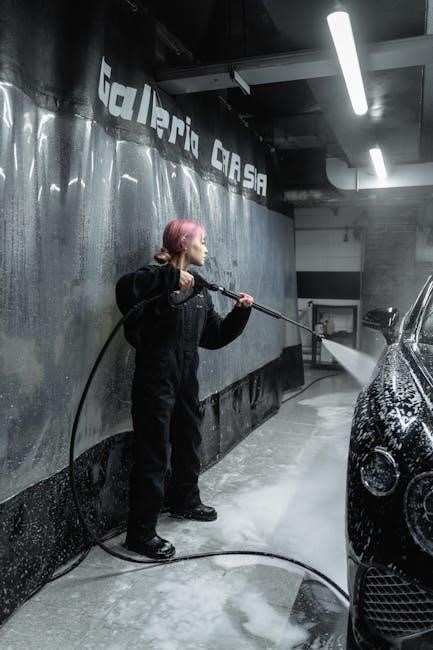
PSI and GPM Ratings
Understanding the pressure (PSI) and flow rate (GPM) is crucial for effective cleaning. This Ryobi 3000 PSI pressure washer delivers a maximum pressure of 3000 pounds per square inch, providing substantial cleaning power for various surfaces. The GPM rating indicates the volume of water delivered per minute, influencing cleaning speed and efficiency.
Higher PSI tackles stubborn dirt and grime, while GPM affects rinsing capability. This model’s specific GPM allows for a balance between power and water conservation. These ratings determine the washer’s suitability for tasks like cleaning decks, siding, vehicles, and concrete surfaces. Always select the appropriate nozzle and pressure setting based on the cleaning task to avoid damage.
Engine Details
The Ryobi 3000 PSI pressure washer is powered by a reliable gasoline engine, designed for robust performance and durability. This engine provides the necessary power to generate the high-pressure water stream required for effective cleaning. Regular maintenance, including oil changes and air filter cleaning, is essential for optimal engine operation and longevity.
The engine specifications include a displacement and horsepower rating, contributing to its overall power output. Proper fuel type and adherence to recommended operating procedures are vital for preventing engine damage. Always refer to the engine manufacturer’s guidelines for detailed maintenance schedules and safety precautions. Ensuring proper engine care maximizes the lifespan of your pressure washer.
Dimensions and Weight
Understanding the physical characteristics of the Ryobi 3000 PSI pressure washer is crucial for transportation, storage, and maneuvering during operation. The unit’s overall dimensions, including length, width, and height, determine its footprint and suitability for various work areas. Accurate dimensional data aids in planning storage solutions and ensuring safe handling.
The weight of the pressure washer, both dry and operational, impacts portability and user comfort. Consider the weight when selecting accessories or planning extended cleaning sessions. Proper lifting techniques are recommended to prevent strain or injury. Knowing these specifications allows for efficient use and safe handling of the Ryobi 3000 PSI pressure washer.